The server nobody dares touch.
Configured by hand two years ago, and the person who did it has moved on.
I rebuild it as code, so it can be recreated in an afternoon.
Infrastructure as code →Remote · Working to your time zone · Taking new projects
You have a product to ship. I make the part underneath it boring: infrastructure in Terraform, releases that deploy themselves, and monitoring that warns you before your customers do. Then I hand it all over, so your team owns it.
Most businesses don't have an infrastructure problem. They have a repeatability problem. Something was set up once, by hand, and nobody has dared touch it since. Here is what that usually looks like.
Configured by hand two years ago, and the person who did it has moved on.
I rebuild it as code, so it can be recreated in an afternoon.
Infrastructure as code →If they're away, nothing ships.
A pipeline that tests and deploys on every merge, with a rollback that has actually been tried.
Deployment & rollback review →Dashboards and alerts that reach a person before the support inbox does.
Hosted monitoring →It grew, and nobody knows which line did it.
A read-only review that names the waste, line by line.
Cost optimization →Old keys, open buckets, admin access handed out "for now".
A security review that lists what is exposed, in order of risk.
AWS security review →And two of them disagree.
Pipelines that survive a rerun, and an answer when the numbers don't match.
Data pipeline review →Every one of those is a system that was never finished. Finishing them is the work I do.
Five ways to work together. Each one starts the same way: you tell me where things stand, and I come back with a fixed quote in writing before any work begins.
New infrastructure, or a move from another provider, done as code.
A fixed-scope look at what you already run, ending in a written, prioritised list.
Ongoing care for an account after it's been reviewed: patching, backups restored rather than assumed, and a written report every month.
Pipelines and reporting that you can trust after a rerun.
A business system, such as a CRM, a booking site or a helpdesk, set up on your own domain and looked after for a year.
Your goal, your current setup and your real constraints: budget, team size, compliance. A free 30-minute call is usually enough.
A written scope, a price and a date. Nothing starts until you agree to it.
Terraform, pipelines, dashboards and alerts, with progress you can see as it happens.
The repository, the runbooks, the dashboards and full admin access. You are never locked in to me.
Talk is cheap in this field. So every project below links to something you can check yourself: a running dashboard, a public repository, or a written case study.
A multi-tenant, HIPAA-oriented healthcare platform, moved off Supabase and onto AWS. Login moved to Cognito with MFA. The database moved to RDS PostgreSQL, with tenant isolation enforced in the database itself, not just in the app. Files are encrypted with KMS, email carries no patient data, and every release deploys from a tested image with automatic rollback.
A managed Grafana stack I host for the client — API, website, cloud and server metrics with alerting and secure credential handover. The demo below is a real dashboard, not a screenshot.
A secure-by-default AWS account baseline in Terraform: encrypted remote state, a multi-AZ VPC with an isolated database tier, and least-privilege IAM. Start compliant instead of retrofitting security later.
Event-driven document extraction on Textract and Lambda. Invoices, receipts and scans become clean CSV, Excel or database records — with low-confidence fields escalated to human review instead of silently corrupting your data.
A cost-safe AWS lakehouse over live flight telemetry. The same dbt models run on DuckDB locally and Athena in the cloud, and CI proves the whole pipeline — 215 tests, 97% coverage — with zero AWS credentials.
The full Grafana + Prometheus + Loki stack installed on your own servers via Docker Compose, with centralised log search and tested alert routing. Full admin access handed over — no SaaS or per-host fees.
A large affiliate travel platform: Viator API integration, custom PHP and WordPress workflows, MySQL ingestion, SEO infrastructure and automated content routing — deployed and monitored on cloud infrastructure.
Read what clients say on Trustpilot ↗ and Upwork ↗
No account manager and no hand-off to a junior. You deal with me from the first call to the handover.
Code in your repository, decisions in the handover, and runbooks your team can follow without me.
Flexible hours, including evenings and overnight, across every US time zone and beyond.
Some setups are fine where they are. Hearing that in a free call is cheaper than finding it out halfway through a project.
17 free checks and calculators, no signup. Run one, and if it finds something you'd rather not fix yourself, send me the result.
I write up the problems I actually hit, including the mistakes. If you want to know how I think before we talk, start here.
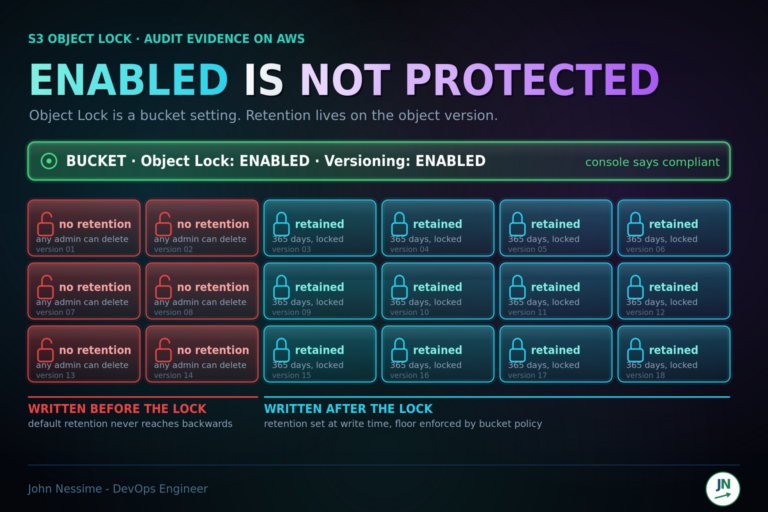 Building an Audit Evidence Repository on AWS: Immutable Retention Without Regret
Enabling S3 Object Lock on a bucket does not protect the objects already in it. This is how to build an audit evidence repository…
Read article →
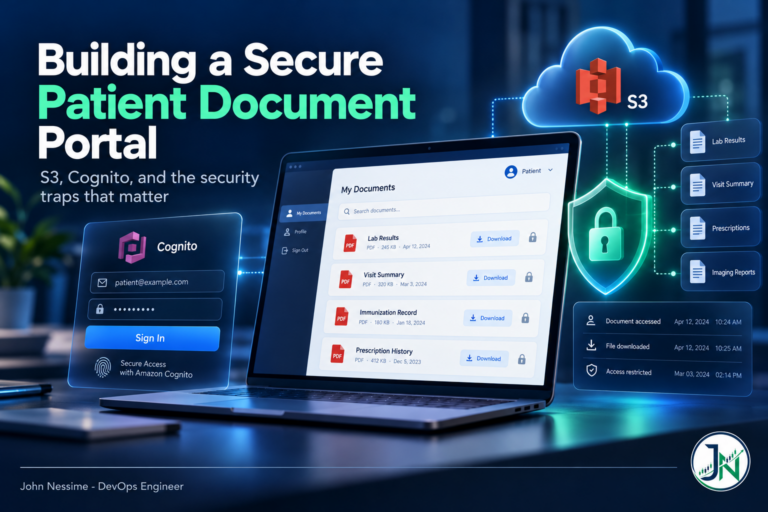 Building a Secure Patient Document Portal on S3 and Cognito
Cognito for sign-in, S3 for the files, and a demo that passes on the first try. The problems start after that. Prefix isolation…
Read article →
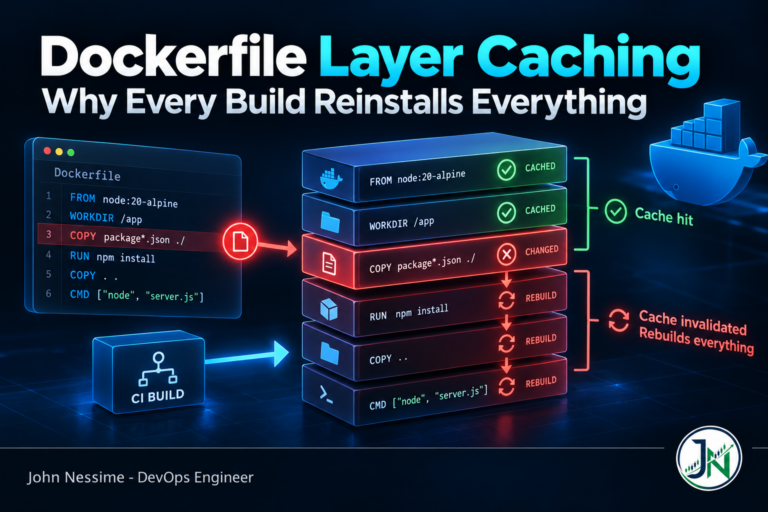 Dockerfile Layer Caching: Why Every Build Reinstalls Everything
Your Dockerfile copies the lockfile before the source, and CI still reinstalls every dependency on every commit. That gap between a…
Read article →
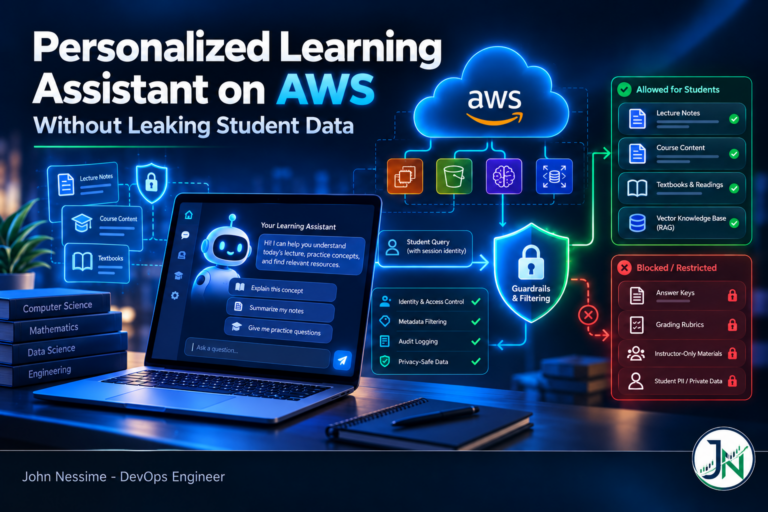 Building a Personalized Learning Assistant on AWS Without Leaking Student Data
A personalized learning assistant on AWS rarely fails loudly. It fails by being helpful to the wrong student. Five failure families…
Read article →
Tell me what you're working on and where it hurts. I'll reply within one business day with the most practical next step, even if that step isn't hiring me.